
Quick answer
Scuba diving in Greece cost starts at 50 EUR for a single shore dive without equipment at sites like Agia Marina Beach along the Athenian Riviera. Equipment rental adds 20-30 EUR per session, while guided boat dives range from 80-150 EUR depending on distance and dive duration. Certification courses run 350-450 EUR for Open Water qualifications, with most operators offering package discounts for multi-dive bookings.
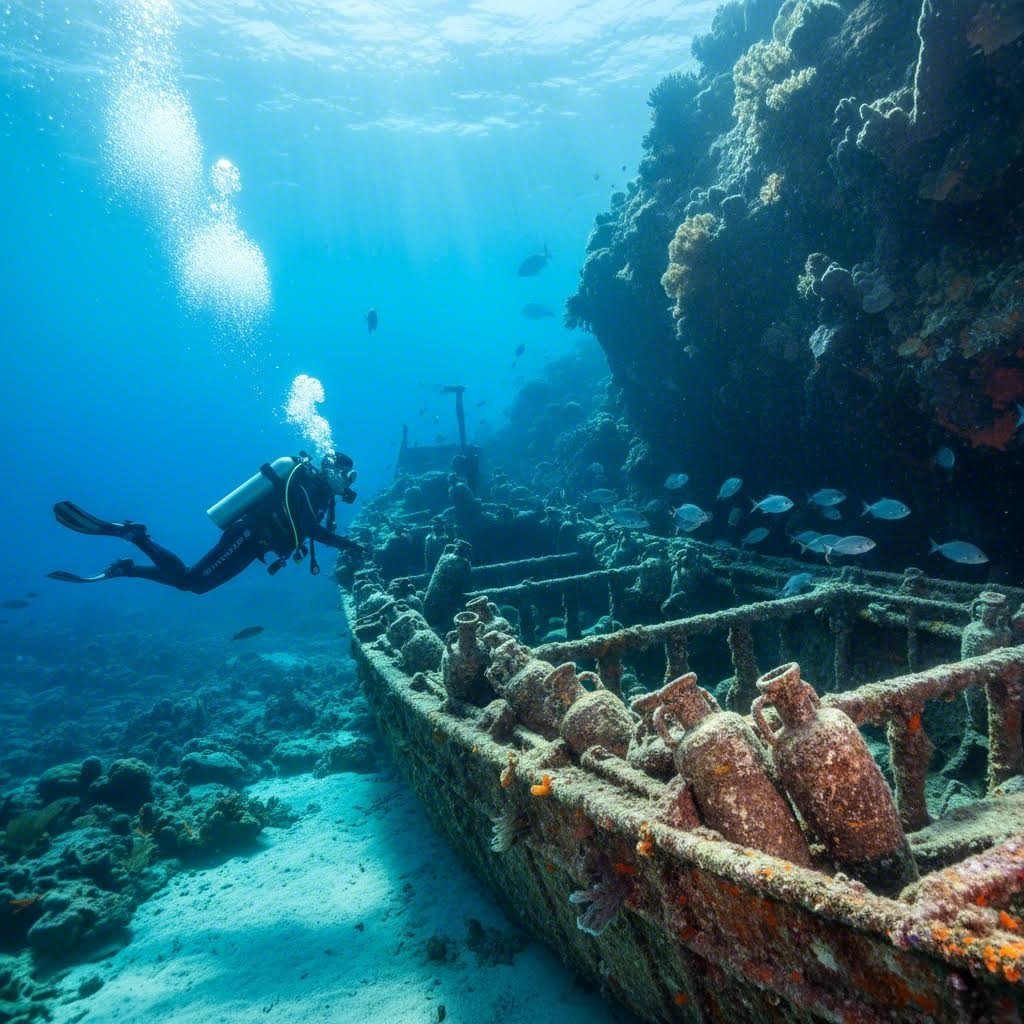
The Aegean seabed holds more than 200 documented ancient shipwrecks within recreational diving depth, yet mainland Greece remains one of Europe's most affordable places to explore them. Dive operators along the Athens-Sounio coastal road work with transparent pricing structures shaped by proximity to shore sites, fuel costs for boat charters, and the regulatory requirement that all recreational dives include a certified guide. A typical shore dive from Agia Marina or Vouliagmeni costs 50 EUR without gear, covering the guide fee, site access, and basic safety equipment like surface marker buoys. Regulators, BCDs, and wetsuits rent separately at 20-30 EUR for the session, though many divers traveling to Greece bring their own masks and fins to reduce trip costs. Boat excursions to deeper sites like the wreck zones off Cape Sounion command higher fees—80 EUR for single-tank trips within 5 nautical miles, up to 150 EUR for two-tank expeditions to protected marine areas requiring special permits. These rates include compressed air fills and onboard safety protocols mandated by Greek diving law. Certification training follows PADI or SSI standards, with Open Water courses priced at 350-450 EUR across four days of pool sessions and open-water dives. Advanced certifications and specialty ratings like wreck diving or nitrox add 200-300 EUR, though package deals bundling multiple courses drop the per-course rate by 15-20 percent. Most dive centers operate April through October when water temperatures reach 20-25°C, with summer months seeing modest price increases of 10-15 EUR per dive as demand peaks. Winter diving remains available at standard rates for those willing to work with 16°C water and reduced visibility. Understanding scuba diving in Greece cost means recognizing that mainland operators compete primarily on service quality and site access rather than price, since regulatory frameworks and equipment standards keep baseline costs relatively uniform. The Athens coastline delivers variety—shallow reefs for beginners at 8-12 meters, vertical walls for advanced divers past 30 meters, and archaeological sites requiring special briefing—without the ferry expenses and accommodation premiums that inflate island diving budgets by 40-60 percent.
“Mainland Greece remains one of Europe's most affordable places to explore the Aegean seabed, with shore dives starting at half the cost of comparable island sites.”
Understanding the Scuba Diving in Greece Cost for Shore Dives
The cost for shore diving in the Athenian Riviera is primarily determined by the base entry fee for site access. This fee covers the fundamental authorization to conduct a dive at the location.
A single adult pays a minimum of 50 EUR for shore access, with the final cost increasing if scuba equipment rental is required.
When to Plan Your Scuba Diving in Greece Cost and Experience
The best arrival window is 09:00–11:00, as morning hours provide the best visibility and calmer sea conditions for diving in the Athenian Riviera. Choosing the right season complements these daily conditions to ensure a stable experience.
May to June
Moderate crowdsWarm 20°C–25°C water
Stable sea conditions and clear visibility are common during this period.
July to August
High crowdsHot 25°C–28°C water
Sea conditions are generally calm, though surface traffic is higher.
September to October
Lower crowdsMild 22°C–24°C water
Water temperatures remain comfortable, and the area is less busy.
Weekday mornings
Low density—
Arriving during these times minimizes group sizes and ensures optimal water clarity.
Verdict: For the best experience, plan for weekday mornings during May, June, September, or October to balance favorable water temperatures with calm sea conditions.
Daily Schedule for Scuba Diving in Greece Cost Logistics
The diving center maintains a consistent schedule throughout the week to facilitate planning for shore dives. Operations are open daily to accommodate visitor logistics.
| Monday | 09:00–18:00 | |
|---|---|---|
| Tuesday | 09:00–18:00 | |
| Wednesday | 09:00–18:00 | |
| Thursday | 09:00–18:00 | |
| Friday | 09:00–18:00 | |
| Saturday | 09:00–18:00 | |
| Sunday | 09:00–18:00 |
Navigating to Your Scuba Diving in Greece Cost Destination
The diving center is located at Agia Marina Beach, situated at the 35th km of Athens-Sounio Avenue. The most direct approach is by car or regional bus along the coastal route of the Athenian Riviera.
Follow Athens-Sounio Avenue (Route 91) to the 35th km
KTEL Attikis bus towards Sounio from Pedion Areos
Direct transfer to Agia Marina Beach
Essential Preparation for Scuba Diving in Greece Cost Readiness
Proper preparation ensures you meet certification requirements and maximize your dive experience at Agia Marina Beach.
-
Bring your certification card — Operators require valid proof of diver qualification before shore dives.
-
Pack your logbook — Recent dive history helps instructors assess your experience level.
-
Confirm your booking in advance — Morning slots (09:00–11:00) offer the best visibility and sea conditions.
-
Bring reef-safe sunscreen — Protect marine ecosystems while preventing sunburn between dives.
-
Wear your swimsuit underneath — Speeds up the wetsuit process and equipment fitting at the dive center.
-
Carry a towel and change of clothes — Facilities provide rinse stations after your dive session ends.
-
Download offline maps to Agia Marina — Mobile signal can be weak along the 35th km Athens-Sounio coastal stretch.
Check availability
Common questions about scuba diving in Greece cost
Everything you need to know about scuba diving in greece cost